Tall case clocks are often called “grandfather clocks,” but not every tall clock fits that name. The terms grandfather clock and grandmother clock refer to specific size categories within longcase clocks. While they share similar mechanics and heritage, their proportions, presence, and placement in a home are different.
Understanding the distinction helps collectors, owners, and buyers properly identify and care for these elegant timepieces.
What Is a Grandfather Clock?
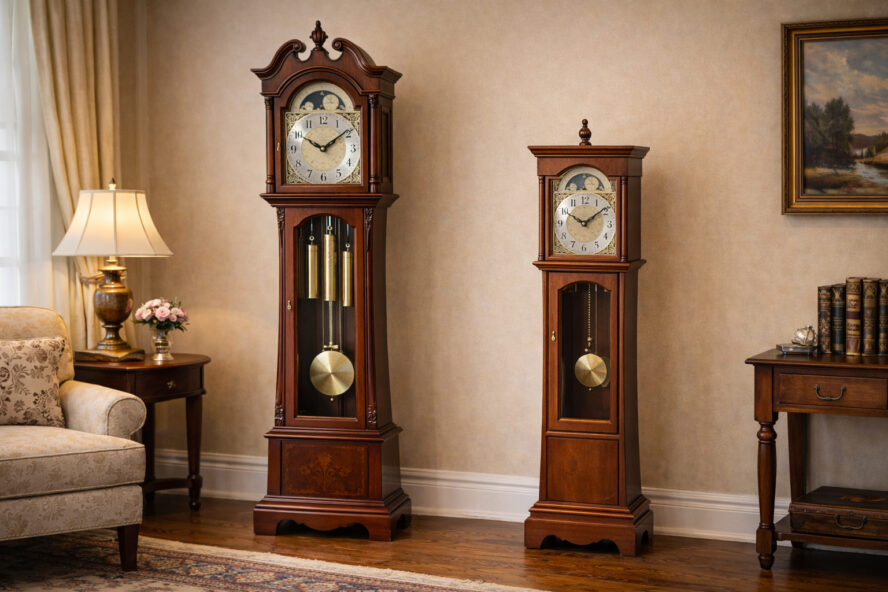
A grandfather clock is the tallest category of longcase clock, typically standing 6 to 8 feet high. These clocks were designed to be statement pieces — both functional and architectural — often placed in entry halls, living rooms, or formal spaces.
Grandfather clocks usually feature:
- A full-length pendulum
- Weights suspended by chains or cables
- A large dial with decorative elements
- A substantial wooden case
- Chime mechanisms in many models
Because of their height, grandfather clocks can house longer pendulums, which historically improved timekeeping accuracy. Many antique examples include elaborate carvings, moon dials, or tubular chimes.
Collectors value grandfather clocks for their craftsmanship, presence, and mechanical complexity.
What Is a Grandmother Clock?
A grandmother clock is a smaller, slimmer version of a grandfather clock, typically standing 5 to 6 feet high. These clocks were designed for homes where space was limited but the elegance of a tall clock was still desired.
Grandmother clocks generally feature:
- Narrower cases
- Shorter pendulums
- Simpler dials
- Lighter overall construction
- Fewer chime options (though some still chime)
They maintain the same core mechanical principles as larger longcase clocks, but their proportions make them easier to place in smaller rooms or apartments.
Many 20th-century manufacturers produced grandmother clocks to meet modern interior design needs while preserving traditional clock aesthetics.
Key Differences at a Glance
The primary difference is size and scale, not function.
Grandfather clocks are tall, imposing centerpiece clocks.
Grandmother clocks are compact, elegant alternatives built for tighter spaces.
Both use pendulum-driven movements. Both can be mechanical or cable-driven. Both may include chimes. The difference is architectural — how much presence the clock commands in a room.

Which One Should I Buy?
The choice depends on:
- Room size
- Ceiling height
- décor style
- desired visual impact
Grandfather clocks are ideal for large spaces and formal settings.
Grandmother clocks work beautifully in smaller homes or modern interiors.
From a repair standpoint, both require the same professional care: cleaning, oiling, bushing work, and periodic servicing to keep the movement running accurately.
Caring for Tall Case Clocks
Regardless of size, longcase clocks benefit from regular maintenance. Dust, dried oil, and worn pivots are the most common causes of stoppage. Proper leveling, stable humidity, and careful winding also play a role in longevity.
If your tall case clock is running slow, stopping, or chiming incorrectly, professional servicing prevents long-term damage to the movement.
Service, Repair & Restoration
Grandfather and grandmother clocks are engineered to last generations — but only with proper care. Many clocks that stop running simply need cleaning and adjustment, not replacement.
Clock Repair Studio specializes in servicing tall case clocks of all sizes. Whether your clock is an antique heirloom or a modern reproduction, expert repair ensures it continues running safely and accurately.
Use the in-home service request form to schedule an appointment to have your Grandfather or Grandmother clock serviced, or call (267) 544-0439 with any questions.